
Key Takeaways
Source plasma is collected primarily for the manufacture of therapies containing proteins such as immune globulins, albumin, and clotting factors.
ABO Plasma’s Calexico center has specific requirements involving age, weight, health, local residency, identification, and recent tattoos or piercings.
First-time donors must complete registration, a health questionnaire, a medical-history review, and a physical examination before being approved.
The collection uses an apheresis machine to separate plasma and return red blood cells, white blood cells, and platelets to the donor.
Hydration, adequate sleep, and a balanced meal can help a donor prepare, but following these steps does not guarantee eligibility.
Federal rules allow source-plasma donation no more than twice in a seven-day period, with at least 48 hours between donations.
Compensation schedules and promotions can change, so donors should confirm current payment details directly with the center.
Before Scheduling a Calexico Donation
Understand How Source Plasma Is Used
Plasma is the liquid portion of blood. It carries blood cells along with proteins, electrolytes, hormones, nutrients, and other substances throughout the body.
At a source-plasma center, collected plasma is generally sent for further processing. Manufacturers can separate its components and use them to produce therapies such as immune globulins, clotting-factor products, and albumin.
These products may be prescribed for people with immune deficiencies, bleeding disorders, certain autoimmune conditions, and other medical needs. Their exact uses depend on the product and the patient’s diagnosis.
This process differs from donating plasma through a blood organization for direct transfusion. Although both forms of donation involve plasma, the collection schedules, eligibility requirements, and final uses may differ.
The effect of one source-plasma donation cannot be expressed responsibly as a guaranteed number of lives saved. Donors contribute to a larger manufacturing supply that depends on eligible people donating over time.
Review the Center’s Eligibility Requirements
Eligibility is determined at the donation center. Meeting the basic requirements does not automatically mean that a person will be approved, since medical history, medications, travel, test results, and current health may also affect the decision.
ABO Plasma states that donors at its Calexico location must:
- Be between 18 and 70 years old
- Weigh between 110 and 400 pounds
- Be in good health
- Have a permanent address
- Live within 90 miles of the center
- Present valid identification
- Have had no new tattoos or piercings during the previous four months
Potential donors should disclose medical conditions, medications, recent procedures, and other requested information honestly. Taking medication does not always disqualify someone, but only the center’s qualified staff can determine eligibility.
People researching the calexico plasma center can find ABO Plasma at 114 Heffernan Avenue, Calexico, California 92231. The center lists its telephone number as 760-350-9676.
Appointments are required for first-time donors and for returning donors who have not donated in the previous month. Availability and center hours should be confirmed before traveling.
What Happens During the First Visit
Registration and Health Screening
ABO Plasma requires donors to bring documentation each time they visit. According to the center, the required documents include:
- A valid government-issued photo ID
- A Social Security card or another supporting document showing the Social Security number
- Proof of a local residential address
Examples of proof of address may include a recent utility bill, credit card statement, lease agreement, or another accepted document displaying the donor’s name and address.
Non-U.S. residents must provide the documentation required by the center. ABO Plasma states that residents of Mexico must present a Border Crossing Card. Anyone uncertain about an acceptable document should contact the center before the appointment.
After registration, a first-time donor completes a questionnaire and provides information about medical history, medications, lifestyle factors, and other eligibility considerations. Staff members then conduct a physical examination and additional screening.
Screening protects both the donor and the plasma supply. Staff may defer someone temporarily or permanently when a requirement is not met. A deferral is a safety decision and does not necessarily mean that the person has a medical condition.
How the Collection Procedure Works
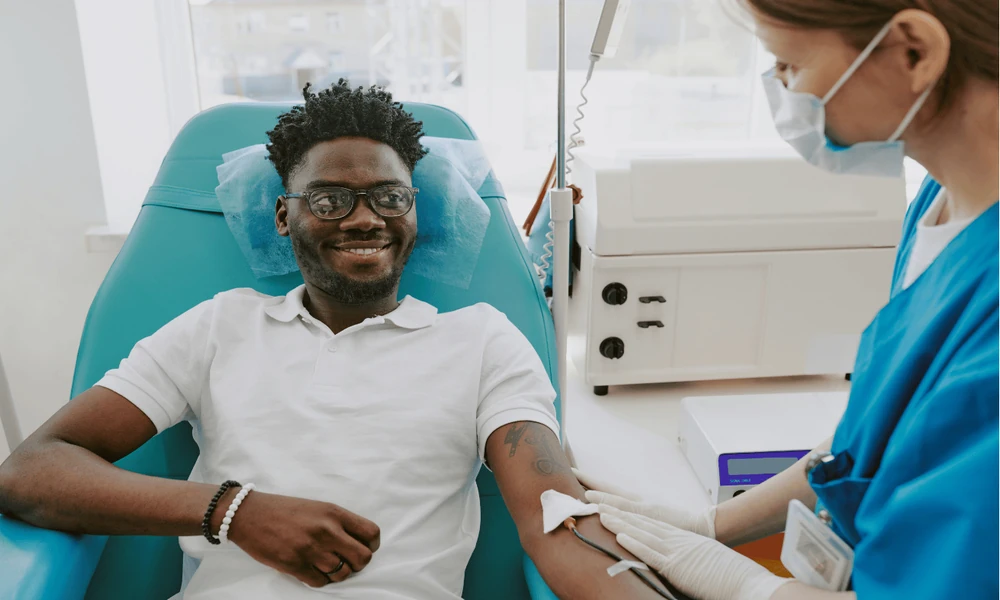
Once the donor is approved, a needle is placed in a vein and connected to an apheresis machine. The machine draws blood, separates the plasma, and returns the remaining blood components to the donor.
The process operates in cycles until the intended collection is complete. The amount collected is determined under applicable requirements and can depend on donor characteristics such as weight.
ABO Plasma states that the collection itself usually takes less than an hour. A first appointment may take up to two hours because registration and health screening require additional time. Individual visits can take longer due to screening results, center activity, or other circumstances.
Afterward, the center asks donors to remain briefly so they can rehydrate and make sure they feel well enough to leave.
Donors should tell staff immediately if they experience symptoms such as:
- Dizziness or lightheadedness
- Nausea
- Tingling or unusual sensations
- Pain at the needle site
- Swelling or discomfort
- Feeling faint or unusually cold
Staff can assess the situation and determine whether the procedure should be paused or stopped.
Preparing for Donation and Recovery
What to Do Before the Appointment
ABO Plasma recommends getting adequate sleep before donating. The center’s preparation guidance advises donors to eat a nutritious meal close to the appointment and drink plenty of water during the preceding 24 hours.
A balanced meal containing protein, iron, and vitamin C may help support the body before collection. Very fatty foods may affect the donated plasma’s appearance or quality, while excessive sodium can contribute to thirst.
ABO Plasma also advises potential donors to avoid coffee, tea, and alcohol before donating. Anyone with dietary restrictions, diabetes, a fluid restriction, or another relevant medical condition should follow the advice of their healthcare professional.
Wear comfortable clothing with sleeves that can be raised easily above the elbow. Bring something quiet to read or listen to if permitted. A charger may also be useful during a longer first visit.
Preparation cannot override an eligibility concern. A person who feels ill, has a fever, is experiencing symptoms of infection, or has another health concern should contact the center before arriving.
A simple preparation plan includes:
- Confirm the appointment and required documents.
- Sleep adequately the night before.
- Drink water throughout the preceding day.
- Eat a balanced meal before the visit.
- Avoid alcohol and other items restricted by the center.
- Wear clothing that allows easy access to the arm.
- Bring identification and residency documentation.
Caring for Yourself Afterward
After donating, drink water and have a snack or meal. ABO Plasma advises donors to avoid strenuous activity for the next 24 hours. The center also recommends avoiding smoking for at least 30 minutes and alcohol for at least four hours.
Keep the bandage in place for the period recommended by staff. If the needle site begins bleeding, apply pressure and follow the center’s instructions. Bruising can occur, but increasing swelling, severe pain, persistent bleeding, or signs of infection should be evaluated.
Some donors may feel tired or lightheaded. Sitting or lying down can help reduce the risk of falling. A person who feels unwell should not drive until the symptoms have resolved.
Contact the donation center or seek appropriate medical care if symptoms are persistent, severe, or concerning. Emergency symptoms require immediate medical assistance.
Recovery needs vary among donors. Being legally permitted to donate again after 48 hours does not mean every person will be approved or feel ready on the same schedule.
Frequency, Compensation, and Informed Decisions
Returning for Future Donations
FDA requirements generally limit source-plasma donation to twice within a seven-day period, with at least 48 hours between donations. ABO Plasma follows this interval for returning donors.
Each visit still includes screening. Previous approval does not guarantee approval at the next appointment. Staff may defer a donor due to vital signs, protein levels, hematocrit, current health, medication changes, recent travel, or another consideration.
Donors should not conceal symptoms or health information to maintain a preferred schedule. Regular donation should always remain subject to the center’s screening results and the donor’s condition.
Keep track of appointments to avoid arriving too early. The center’s scheduling system may also help determine when another donation is permitted.
Anyone who repeatedly feels unwell after donating should discuss the issue with center staff and a healthcare professional before continuing.
Understanding Compensation
Compensated plasma centers pay donors for the time and commitment involved in the process. Compensation does not represent the sale of blood cells or guarantee that every attempted visit will result in payment.
ABO Plasma states that compensation is processed within 24 hours after a completed donation. Donors who do not receive it within that period are instructed to contact the center.
Payment amounts may depend on the current schedule, promotions, donation frequency, or other program terms. A figure found in an old advertisement or on another location’s page may not apply to the Calexico center.
Before relying on an expected amount, ask:
- What is the current payment for an eligible completed donation?
- Are promotional amounts subject to additional requirements?
- How is compensation delivered?
- When should funds become available?
- What happens if a donor begins but cannot complete the procedure?
- Are there fees associated with the payment method?
Plasma donation can offer compensation while supplying material used to manufacture important therapies. It should still be approached as a medical procedure. Potential donors should understand the screening process, prepare carefully, follow recovery instructions, and ask questions whenever something is unclear.
FAQ
Is every adult eligible to donate plasma?
No. ABO Plasma lists basic age, weight, health, residency, and documentation requirements, but final eligibility is determined through screening at the center.
What documents are needed?
Donors generally need a government-issued photo ID, proof of a Social Security number, and proof of a local address. Additional documents may be required for non-U.S. residents. Residents of Mexico should review the Border Crossing Card requirement.
How long does a first appointment take?
ABO Plasma states that a first visit may take up to two hours because it includes registration, medical-history review, screening, and the collection procedure.
Can a person donate after getting a tattoo or piercing?
ABO Plasma requires a four-month waiting period after a new tattoo or piercing. Donors should confirm the current rule with the center if the procedure occurred recently.
Can someone donate while taking medication?
Possibly. Some medications may be acceptable, while others may lead to a temporary or permanent deferral. Donors should provide a complete medication list and let qualified staff make the determination.
How often may an eligible donor return?
Source plasma may generally be donated no more than twice in seven days, with at least 48 hours between visits. Eligibility is reassessed at each appointment.
Is compensation guaranteed for arriving at the center?
No. Compensation typically applies to a completed, eligible donation under the center’s current program. Contact ABO Plasma for the latest payment schedule and conditions.
What should a donor do after the procedure?
Drink water, eat, rest, and avoid strenuous activity as directed. ABO Plasma also advises avoiding smoking for at least 30 minutes and alcohol for at least four hours. Persistent or serious symptoms should be reported promptly.
Useful Resources
- ABO Plasma Calexico – Location, eligibility, appointment, preparation, and compensation information.
- U.S. Food and Drug Administration – Federal information about blood and blood products.
- HHS Giving Equals Living – Information about plasma and plasma-derived therapies.
- Plasma Protein Therapeutics Association – General information about source-plasma donation and plasma-derived medicines.
This article provides general educational information and does not replace screening by donation-center staff or advice from a qualified healthcare professional.

Comments are closed.