
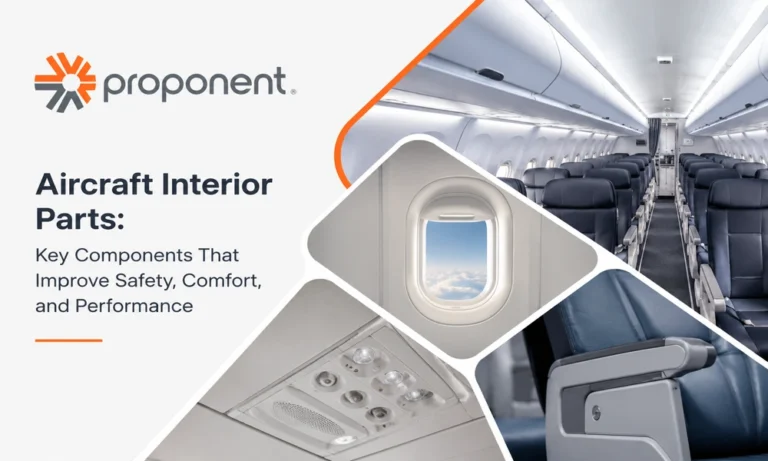
Is just as literally true: every flight is about more than big engines and radar systems. The aircraft interior parts are significant in the development of a safe, comfortable, and effective cabin for passengers and crew. These elements consist of every little thing inside the aircraft such as seating, storage compartments, and wall panels to flooring, lighting, and lavatory fittings.
All interior components are designed with stringent aviation safety standards in mind while achieving low-weight and high-durability for the entire aircraft.
Types of Aircraft Interior Components
Modern aircraft consist of hundreds of integrated aircraft interior parts working together to enhance passenger experience and operational excellence.
The most common components are:
- Passenger seats
- Overhead storage bins
- Cabin wall and ceiling panels
- Flooring systems
- Galley equipment
- Lavatory modules
- Window panels and shades
- Cabin lighting systems
Each part should fit perfectly and operate consistently over the lifespan of the aircraft.
Why Quality Matters?
Quality elements for jet interiors do not only guarantee passenger comfort. They also limit the operational efficiency and assist airlines in decreased maintenance expenses.
Well-manufactured components offer several advantages:
- Better durability
- Lower replacement frequency
- Reduced aircraft weight
- Improved passenger experience
- Easier maintenance and repairs
Even tiny refinements in the composition of cabin components help drive superior fuel economy through an overall decrease in weight.
Materials Used in Aircraft Interiors
Aircraft manufacturers choose building materials that are strong yet light. In fact, many aircraft interior parts are manufactured with the use of advanced composite materials, as well as lightweight aluminum, engineered plastics, as well as fire-resistant materials.
These materials selected for:
- Meet aviation safety regulations
- Resist wear and corrosion
- Handle temperature changes
- Help reduce fuel consumption
You must test every material to death before you can use it in the inside of an airplane.
Maintenance and Replacement
Frequent inspections cause aircraft interior components to last longer. Seats, panels, flooring, and other storage compartments are prone to wear because they are often used by passengers over time.
Routine maintenance may include:
Routine maintenance enables you to not only support both safety and appearance at the same time but additionally decrease your probability of pricey repairs.
Choosing the Right Supplier
Airlines, MRO and OEM should choose a supplier they can trust. Regulatory compliant, manufactured with process-controlled techniques over time – a certified component from a trusted supplier.
For every supplier comparison, product quality, delivery assurance, availability of replacement parts for longer duration, technical support, and certification standards should be taken into consideration.
Final Thoughts
Ensuring these aircraft cabins are not only safe but also efficient and comfortable − is one of an engineer’s biggest hurdles because it’s heavily reliant on reliable aircraft interior parts. Passenger seating, overhead bins, interior cabin panels, and floors. Selecting high-quality raw materials, maintaining with greater frequency, and ensuring the best supplier partnerships will yield more operational performance for airlines and aviation companies, allowing passengers to have a comfortable experience on board any flight.